Skip to content
Edu

Bip's Club How does artificial intelligence work? Films for preschool and early primary children.

The films explain what artificial intelligence is and where it is used. They are made to be watched together with a grown-up.

I'm a dad of two preschoolers. In October 2026 I gave a live show about artificial intelligence at a preschool, and it went very well, as far as I can tell. Three films came out of it, one for each age group (3 to 5, 5 to 6 and 6 to 9 years old). Every film exists in Polish, English and Spanish.

The films are on YouTube, on the channel Klub Bipa (Bip's Club in English, El Club de Bip in Spanish). Each film below links to its YouTube page.

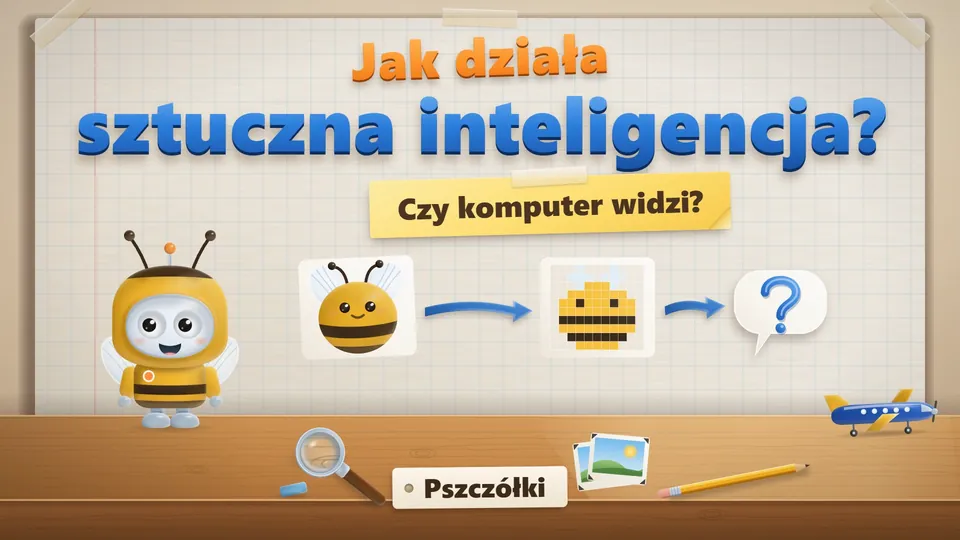
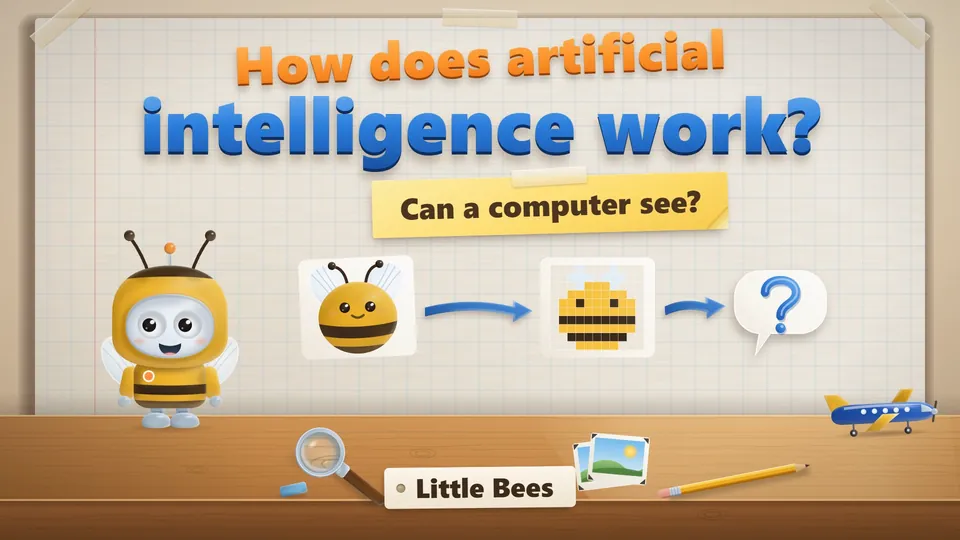
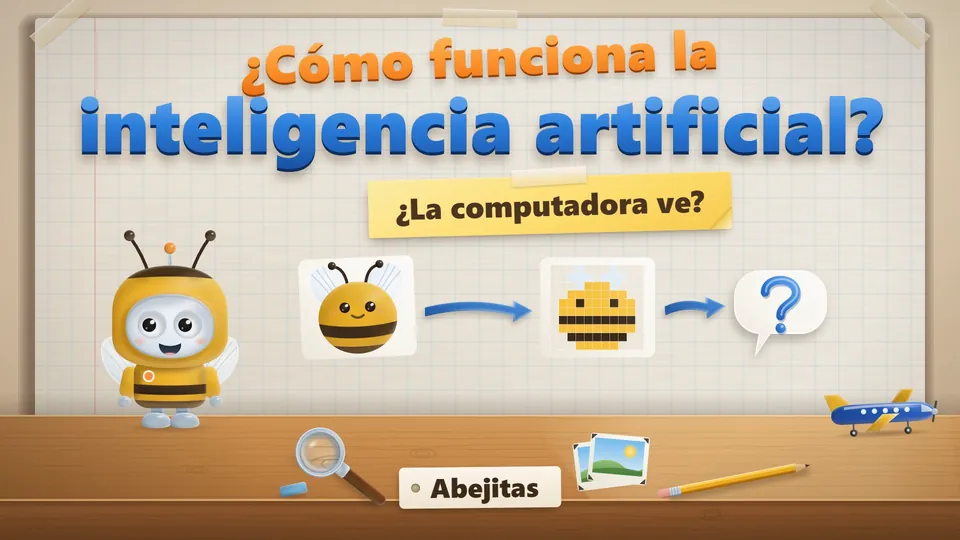
Title card of the first film: Bip in a bee costume stands beside a picture of a bee that turns into big colored squares, under the question: can a computer see?
Title card of the film for Pszczółki (Little Bees), English version.
Meet Bip

A small drawn robot who says what was written for him

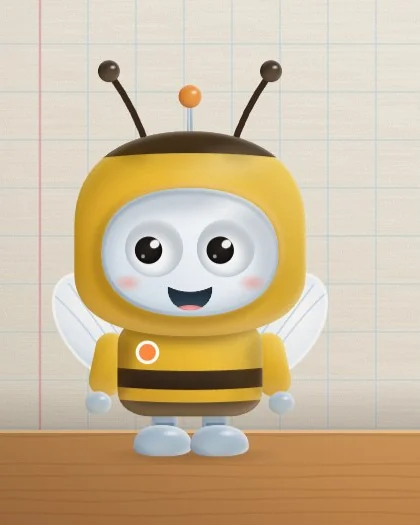
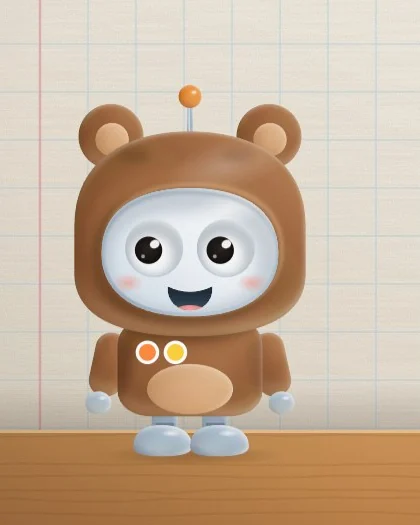
Bip is a cartoon mascot who looks like a small robot. In each film Bip wears a costume that matches the group: a bee, a bear or a kangaroo. Bip says hello, answers questions and sometimes gives a wrong answer on purpose, so that we can talk about mistakes.

Bip is not artificial intelligence. Everything Bip says was written down ahead of time, and the films tell the children so.

  • Bip, a cartoon robot in a bee costume: yellow hood with two antennae, striped body and small transparent wings.

    Pszczółki

    Little Bees, ages 3 to 5

  • Bip, a cartoon robot in a bear costume: brown hood with round ears and a light patch on the belly.

    Niedźwiadki

    Little Bears, ages 5 to 6

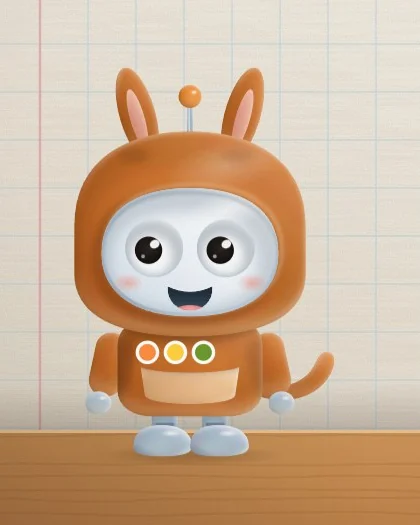
  • Bip, a cartoon robot in a kangaroo costume: orange hood with long ears, a pouch on the belly and a tail.

    Kangurki

    Little Kangaroos, ages 6 to 9

The films

Three films in three languages

Choose a language, then the film for your child's group. The language changes the titles, the lengths and the thumbnails. The ages are the groups I made each film for, so use them as a guide.

Language of the films

Title card of the English version: Bip in a bee costume beside a bee picture and the question: can a computer see?

Pszczółki · Little Bees Ages 3 to 5

Can a computer see? Artificial intelligence for kids ages 3 to 5

Length

  • What artificial intelligence is, and the ways we can ask a computer for something.
  • Senses and sensors: a camera works a bit like an eye, a microphone a bit like an ear.
  • Bip gives a wrong answer on purpose, and we fix it together.
  • A guessing game with a picture made of big colored squares, which get smaller and smaller.
  • Where programs like this are used, what they can create, and why a person checks their work.
Watch on YouTube
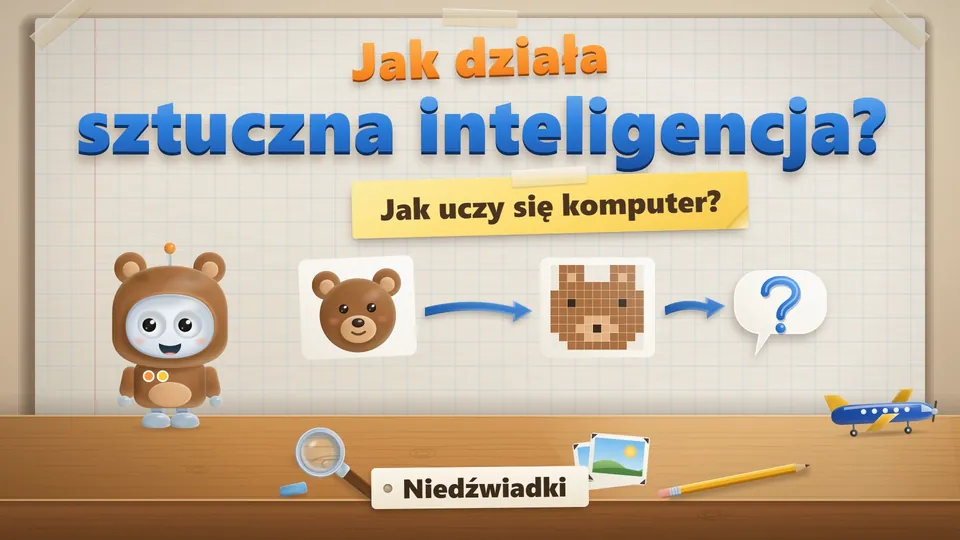
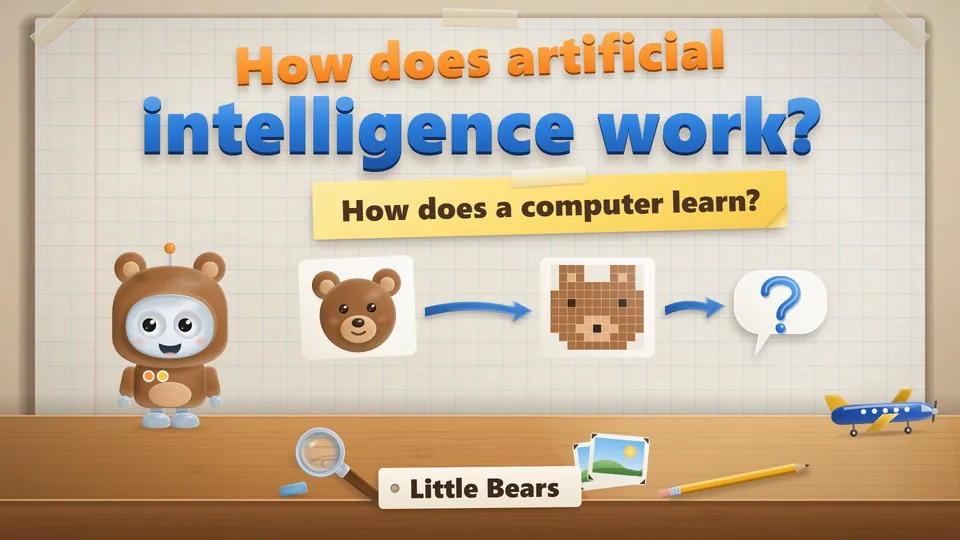
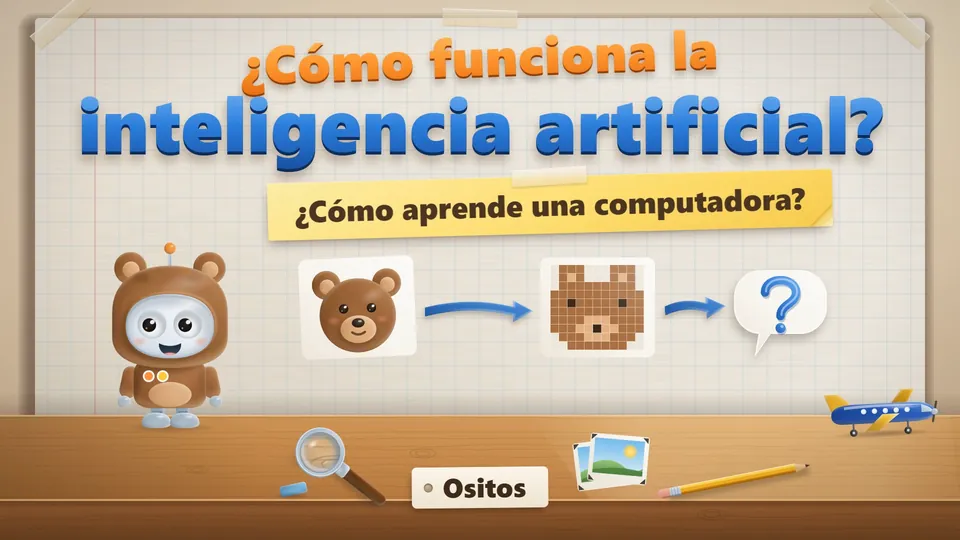
Title card of the English version: Bip in a bear costume beside a bear picture and the question: how does a computer learn?

Niedźwiadki · Little Bears Ages 5 to 6

How does a computer learn? Artificial intelligence for kids ages 5 to 6

Length

  • Senses and sensors, and the different ways we can talk to artificial intelligence.
  • Bip shows how a program that is just starting out can get bear pictures wrong, and we choose which examples to add.
  • A network of calculations: a simplified drawing, and why a program is not a brain.
  • Where programs like this are used, where the biggest ones learn, and what they can create.
  • Programs that help, how airlines use them, and why grown-ups check the results.
Watch on YouTube
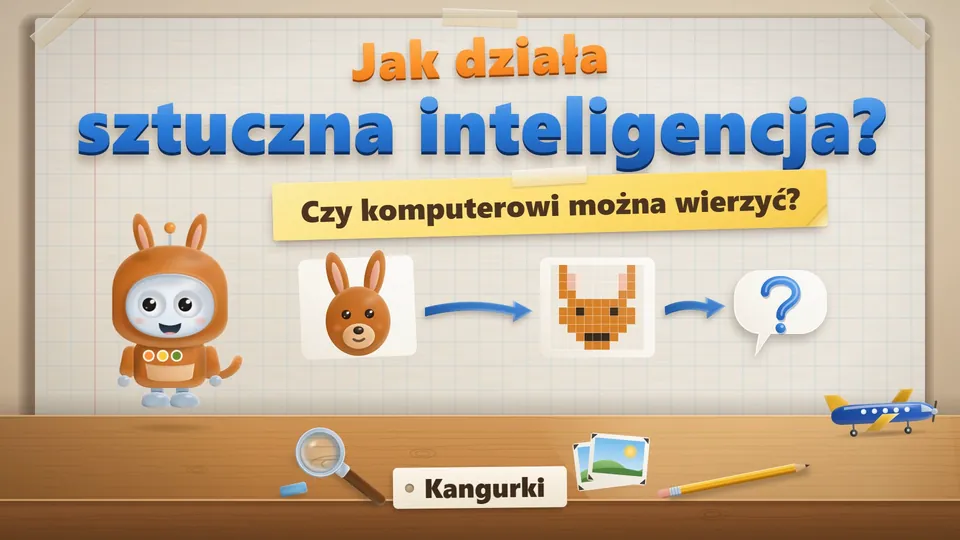
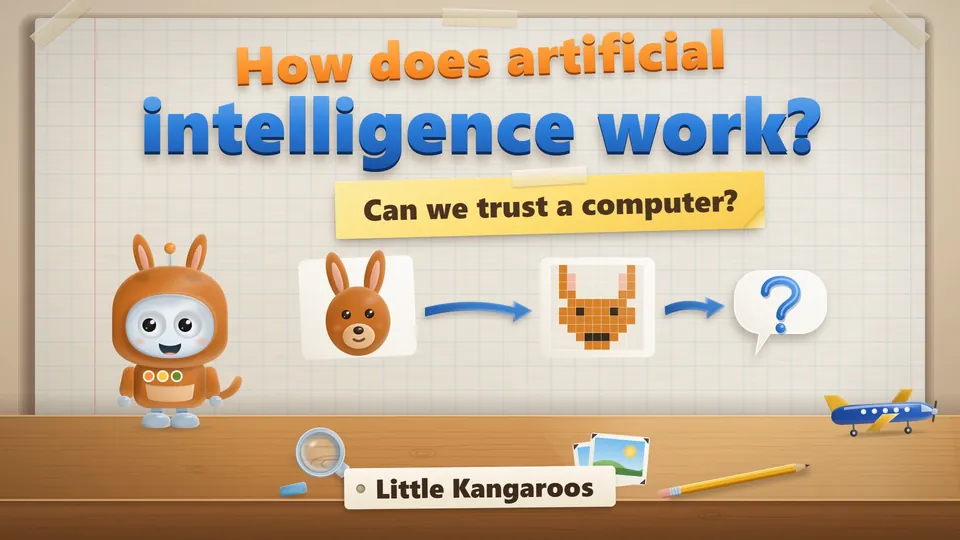
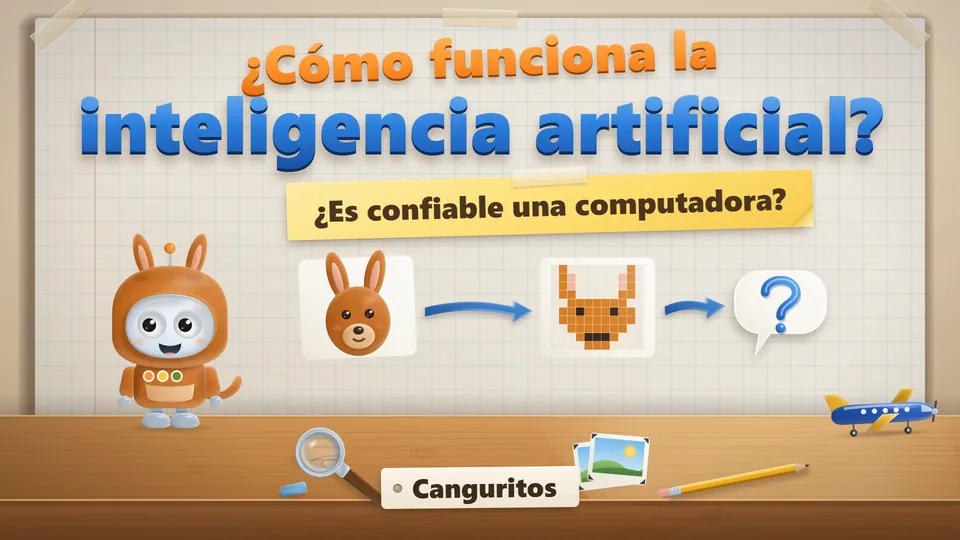
Title card of the English version: Bip in a kangaroo costume beside a kangaroo picture and the question: can we trust a computer?

Kangurki · Little Kangaroos Ages 6 to 9

Can we trust a computer? Artificial intelligence for kids ages 6 to 9

Length

  • How people know what they know, what sensors are, and how we talk to artificial intelligence.
  • A network of calculations, how a model learns from examples, and how a chat program picks the next word.
  • Bip guesses what is in the kangaroo's pouch, which shows that a program can answer even when it has no information.
  • Where the big models learn, and why a person checks what a program says.
  • A small program of our own, taught in Teachable Machine, followed by safety and privacy.
Watch on YouTube

The narrator's voice is a computer-made copy of my own voice, and Bip's voice was generated by a computer. The drawings were made with the help of AI tools. Details and credits are below.

For parents and teachers

Watching together

The films work best when a grown-up sits beside the child. Every film ends by reminding children to use computers and artificial intelligence together with a grown-up. Each film is built from short topics, so you can pause after any one of them and talk about it. The youngest group's film runs between 9 and 10 minutes. The oldest group's film runs between 25 and 27 minutes, so the long one can be watched in parts.

Questions for after the film

  1. Which senses do you have, and which sensors can a computer have?
  2. Bip sometimes gave a wrong answer, or only a guess. How can we find out whether an answer is right?
  3. Where have you seen a program like this at home or on the street?
  4. Who checks whether a program is right?
  5. What do we do when an app asks for our name, address, photo or password?

The first four fit all three films. The last one follows the privacy part of the Kangurki film.

Safety online and with AI programs

  • Children use computers and artificial intelligence together with a grown-up. This is the closing message of every film.
  • A program can make mistakes, and it can give an answer even when it has no information to base one on. A person checks.
  • Some apps send questions over the internet to big computers. If an app asks for a full name, address, photo or password, the Kangurki film tells children to ask a parent or a teacher.
  • Pictures made by a computer can look like real photos, so it is good to say when a computer made a picture.
Transparency

How the films were made, and what is generated

Some of what you see and hear in the films comes from a computer. Here is how each part was made.

  • The narrator's voice is cloned

    A computer recreated my voice from my own recordings, and the recordings are in Polish. The cloned voice speaks Polish, English and Spanish for me.

  • Bip's voice is generated

    A computer generated Bip's voice. A person wrote Bip's words in advance, and Bip is not artificial intelligence.

  • The drawings were made with AI tools

    I typed what I wanted, and an AI program wrote the code that draws the pictures. The films show a short example: changing the rug in the picture to one with bananas. For the film I retyped the request, in English and in Spanish for those versions (the original was in Polish). The wait in the film was shortened.

  • The music is synthesized

    A script of my own synthesizes the music.

  • One real photo, with credit

    The films for Niedźwiadki and Kangurki show a real photo of a hall full of computers. Photo "BalticServers data center.jpg" by BalticServers.com, CC BY-SA 3.0, via Wikimedia Commons. The frame is cropped.

  • Teachable Machine

    The Kangurki film trains a small program in Teachable Machine, a free tool from Google. The clip is an illustrative recording of a real run. The photos of the cards were uploaded from files, and no camera was used.

Who made this

Krzysztof Głuszczyk

I founded Creatiwi.ai, where I help organizations work with generative AI. I am also a dad of two preschoolers, and Bip's Club comes from that second role. The films and this page are separate from what Creatiwi.ai does for organizations.

Follow Bip's Club

The films are on YouTube. This button takes you to the channel, Klub Bipa.

Subscribe on YouTube

A show in your preschool?

If you work in a preschool and would like to talk about a live version of the show, write to me.